
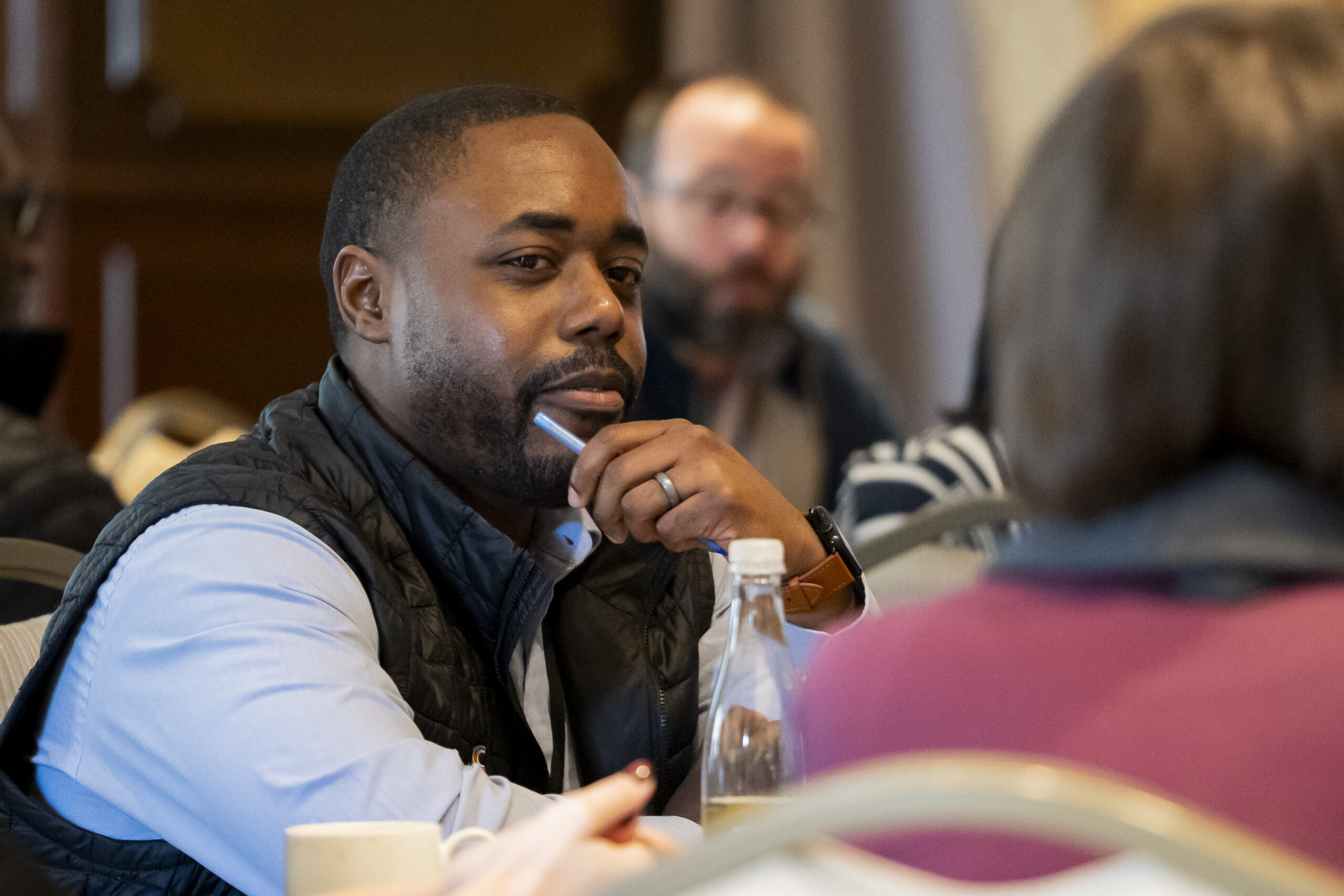
Senior Grants & Programs Manager John Gabelus participates in brainstorming workshop.
One of our team’s priorities this year is to build our capacity to work more closely with American Indian and Alaska Native (AI/AN) communities. Much of that thinking is based on recent CareQuest Institute research showing that AI/AN communities face a disproportionate burden of oral disease. For decades, structural racism and a lack of necessities, such as healthy food and adequate housing, have contributed to disparities, including:
- The prevalence of early childhood caries in AI/AN communities is three times higher than for white children.
- AI/AN adults are twice as likely to have untreated decay as the overall US population, and 83% of AI/AN adults report tooth loss compared with 66% of the overall US population.
- Three and a half times as many people who identify as AI/AN report going to the emergency department for dental care or mouth pain in the last year (13.5%) compared with those who do not identify as AI/AN (3.9%).
In 2026, we’re expanding our team by hiring a new Grants & Programs Officer who will focus on this portfolio and deepen engagement with existing partners and tribal communities so that our investments are more targeted, more responsive, and better positioned to deliver meaningful impact.
Building on Existing Work with AI/AN Communities
We’re fortunate to already be working with several partners within AI/AN communities, including the Society for American Indian Dentistry, the Northwest Portland Area Indian Health Board, the Southern Plains Tribal Health Board, and the American Dental Therapy Association (ADTA), among others. Earlier this year, we were also pleased to award a grant to a new partner, the National Council of Urban Indian Health, which will complete research about the oral health status and experience of the more than 70% of AI/AN people who live in urban areas.
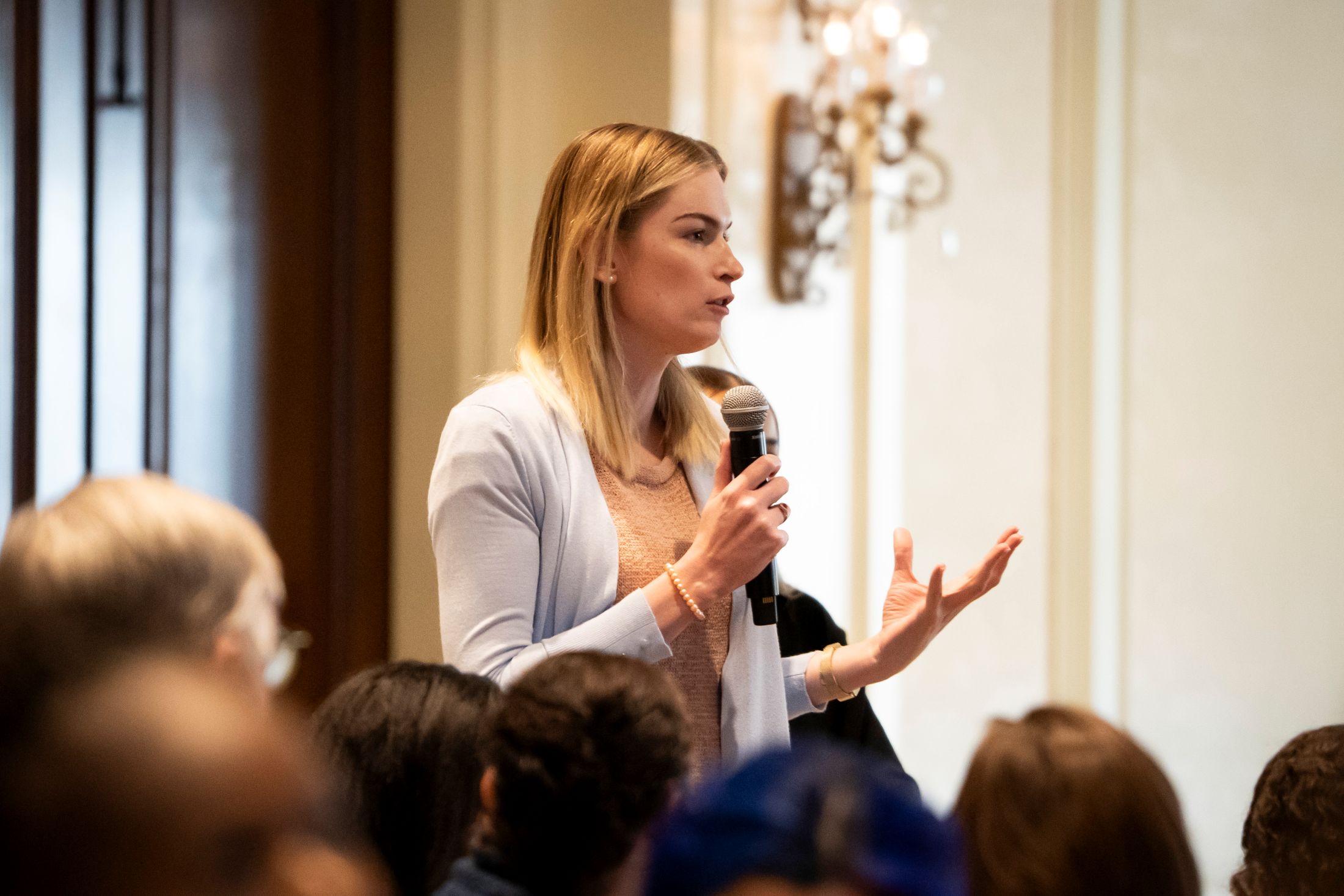
Grants & Programs Officer Marceline English speaks at the 2026 annual retreat.
Those grants are just one step on our journey to learn from and with tribal communities about their unique oral health needs. Educating our team about those unique needs is important, too.
To that end, some members of our team attended the National Dental Therapy Conference in Sacramento in December 2025. ADTA and another grantee partner, Community Catalyst, hosted the conference, which featured voices from across the country, including the California Pan-Ethnic Health Network, Asian Resources, Florida Voices for Health, and the Michigan Primary Care Association.
Dental therapy has its roots in tribal communities. It is a community-driven model of care delivery that aims to improve access and expand the workforce, making sure it is demographically and culturally reflective of the patients being served. Much like the origin of dental therapy, the conference was diverse and action oriented, with sessions focusing on communications, advocacy, and practice.
Mari Houlihan, Grants & Programs Officer for Texas and the West, joined representatives from Delta Dental of Michigan Foundation and Arcora Foundation on a panel to discuss philanthropic investment in dental therapy. The discussion highlighted dental therapy’s role in expanding access, strengthening cultural representation within the workforce, and delivering care in nontraditional settings such as schools, nursing homes, and emergency departments. The panel also underscored alignment with organizational efforts to build an accessible, equitable, and integrated oral health system, noting momentum achieved through partnerships across states including California, Washington, and Colorado. In addition, the conversation reinforced the importance of pairing direct care investments with sustained support for advocacy and organizing to ensure long‑term, systemic change.
Katinka Hakuta, MPH
As we continue into this year and bring on a new team member, we’ll continue to collaborate with our Policy & Advocacy team to support tribal partners working to advance dental therapy through policy change at the state level while exploring other ways to improve access to oral health services and the oral health experience of AI/AN communities.
Editor’s note: Learn more and apply for the position on our website.
Authored by Katinka Hakuta, MPH, Senior Manager, Grants & Programs, CareQuest Institute