
What National Data Shows — and Why Action Matters
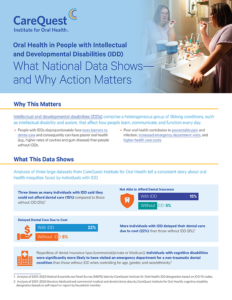
In this data analysis, CareQuest Institute researchers found that people with intellectual and developmental disabilities (IDD) face greater barriers to dental care and have worse oral health outcomes than those without disabilities.
View visual report
Key Findings
- Three times as many individuals with IDD said they could not afford dental care (15%) compared to those without IDD (5%).
- Adults with cognitive disabilities were more likely to have an oral health problem in the prior year (82%) than adults without IDD (51%).
- Nearly twice as many adults with cognitive disabilities rate their oral health as fair or poor (41%) compared to adults without IDD (22%).
- Individuals with cognitive disabilities were significantly more likely to have visited an emergency department for a non-traumatic dental condition than those without IDD.
The authors write:
These inequities contribute to preventable pain, emergency department use, and higher health care costs, underscoring the need for a multifaceted approach to improve oral health for this population.”
You may also be interested in:
- Special Patient Care, a collection of free self-paced courses that help dental teams tailor care to individuals with complex care needs — such as physical, developmental and cognitive disabilities. Each course is eligible for one free CE credit.
- Teaching Dental Students to Confidently Care for Patients with Disabilities, a blog post about a pilot program at the University of Florida College of Dentistry that trains the next generation of dentists to confidently care for patients with special needs.
- Exploring Oral Health and Care Access among Adults with Disabilities, a report about the challenges adults with disabilities face in accessing oral health care and policy recommendations to improve access to care.